Background
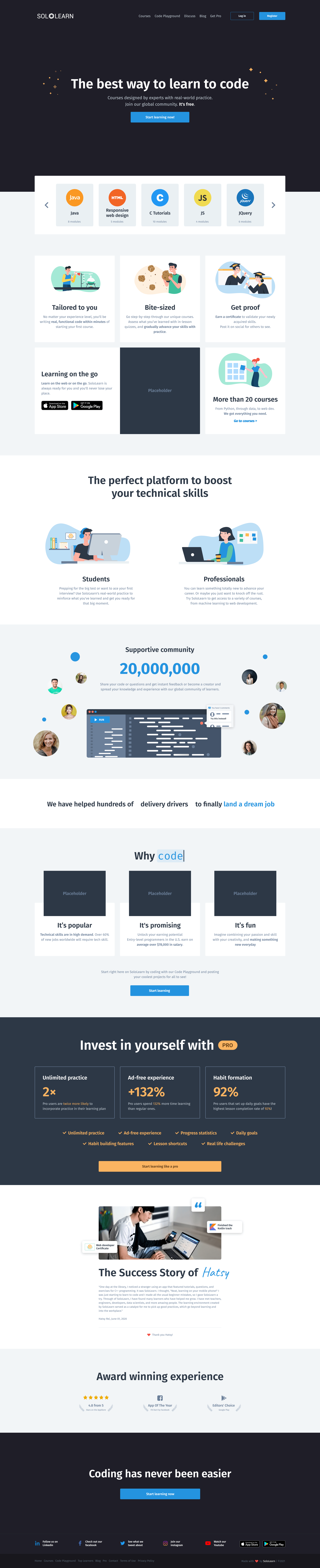
The homepage is the first impression a user gets of any company's website — and exactly where Sololearn had a limited window to convince visitors they could get what they came for.
Sololearn's homepage had real room to improve. Upgrading its content, structure and design could raise the share of visitors who interact with the site and sign up — and in turn, the number of users engaging with everything else the platform offers.
Quantitative research
User type definition
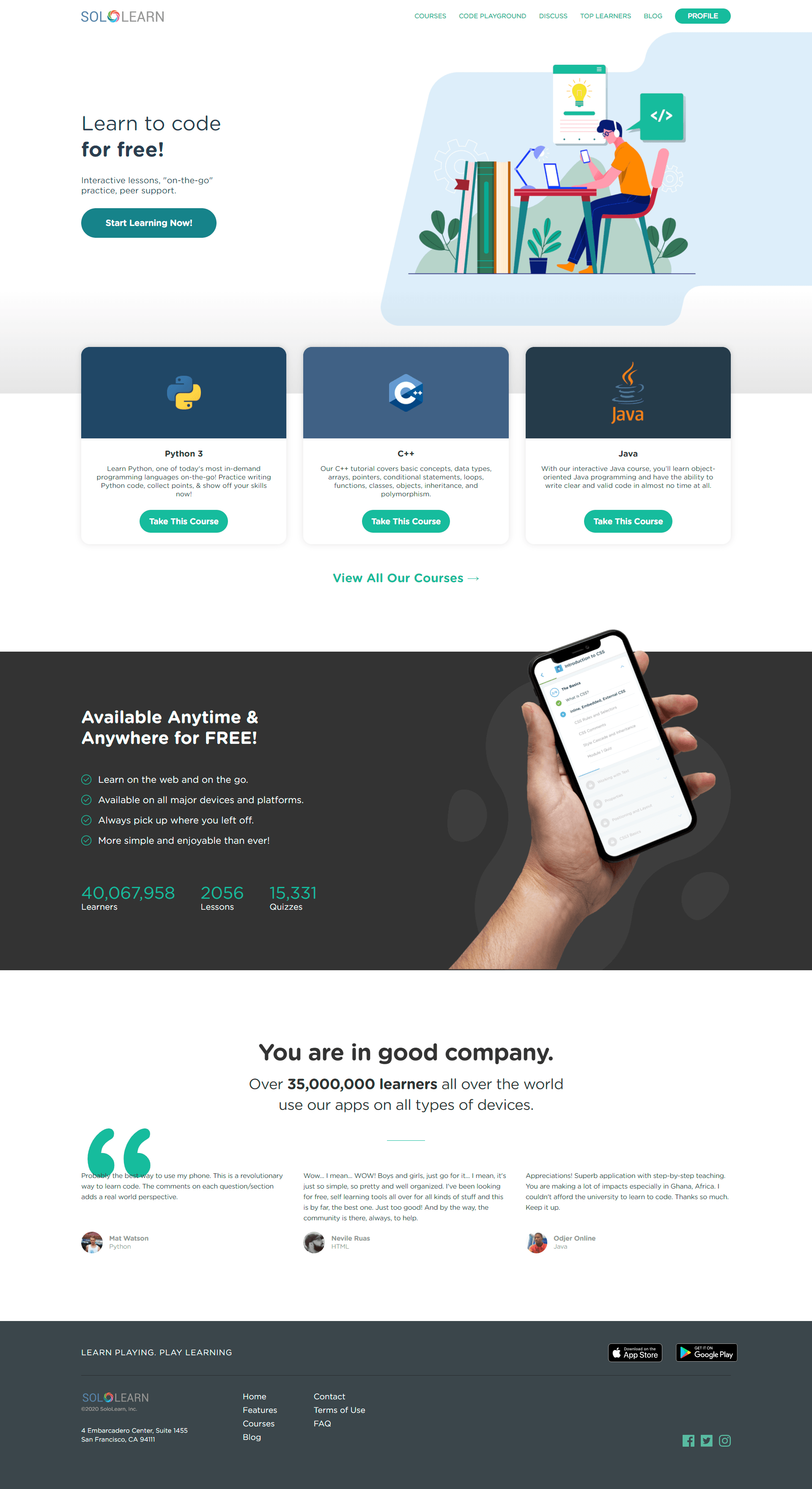
To get a high-level understanding of the homepage's structure, I first looked at quantitative data from the product's onboarding surveys — collected across all three platforms, 33,162 responses over 3 months.
Based on this data I built user personas matching what we found, with prioritized targeting techniques.
Data collection
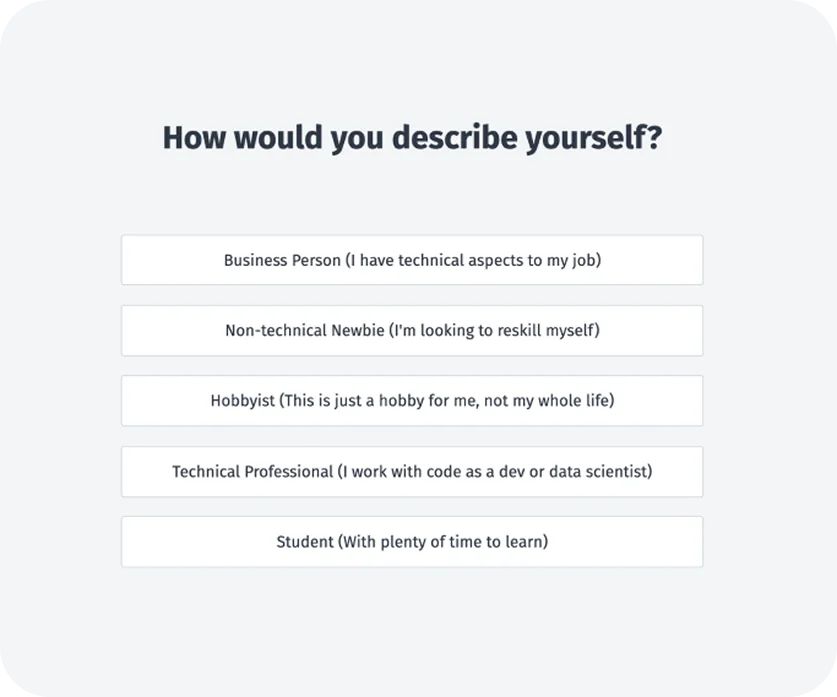
Vertical heatmap prioritization
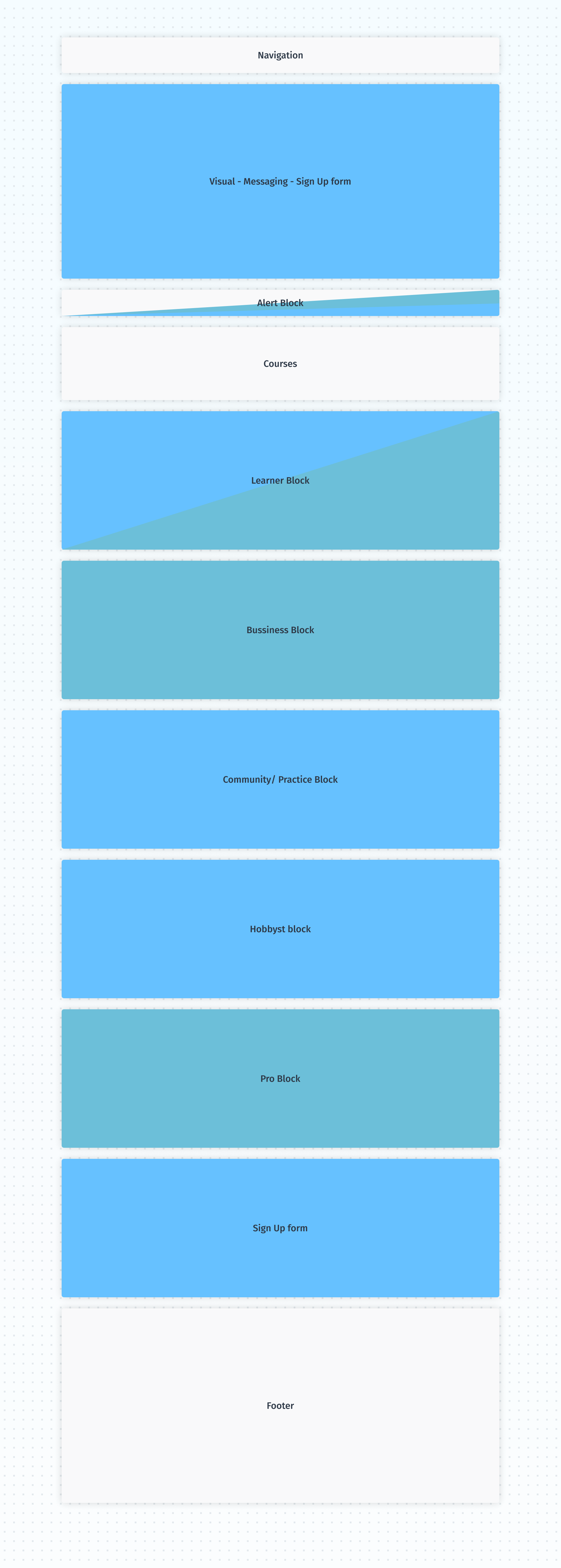
After building personas from the user types in the survey, I had a general picture of the sections. This helped prioritize section targeting to perform as effectively as possible within the vertical scroll heatmap.
Personas

Julia
Student + technical, 58.91% combined. Wants to be confident in their working and learning field, enlarge field coverage, and pursue a career in a programming-related field.

Adam
Non-technical, 21.04%. Wants to get a job, make money, learn new skills and enter new job markets.

Bunny
Hobbyist, 13.11%. Wants to build new hobbies.

Debian
Business person, 6.96%. Working on building an existing product.

Marco
A combination of all of the above motivations, plus an added willingness for self-investment.
Ideation
Personas × value props
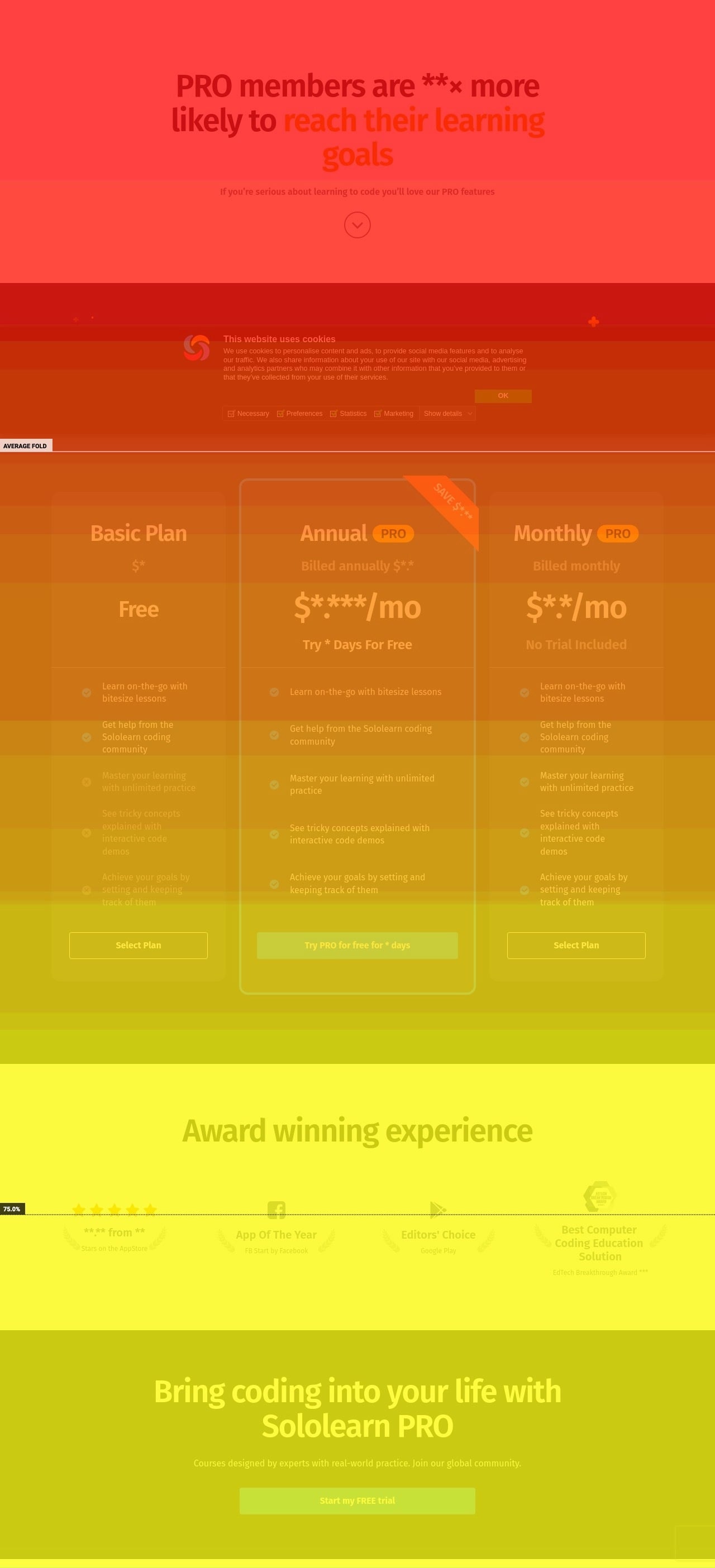
Aligning the targeted personas with the product's main value propositions, I mapped what could go in each section — targeting the most common user group in the most easily discoverable section, since discoverability decreases further down the page.
Final design
After passing through all of these stages and collaborating with the content and visual design teams, we arrived at the final designs for the homepage.
Testing and iteration
The final stage followed the deliverables: testing, analyzing data post-release, and continuously iterating and testing again.